Could Estonia be the next growth opportunity for Finnish companies?
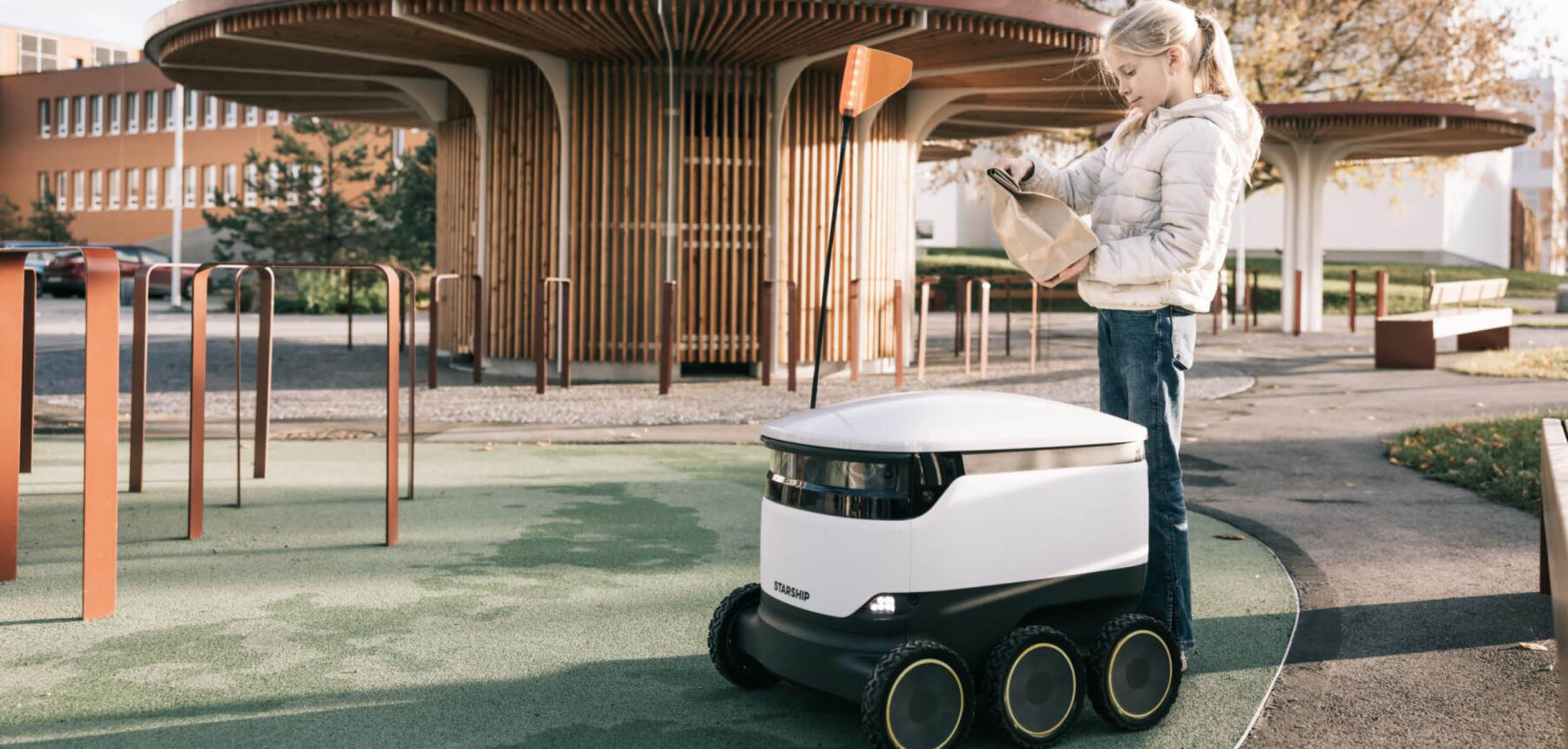
The short distance between Tallinn and Helsinki creates the conditions for close cooperation, but even more important than geographical proximity is the way the two countries’ ecosystems complement each other. Estonia’s digital infrastructure, startup experience, technology development networks and flexible collaborative environment can give a Finnish entrepreneur the opportunity to put their next idea to the test faster.
ESTONIAN startup success stories are often associated with Skype, Wise and Bolt. These companies have helped shape Estonia’s international reputation, but today the ecosystem is far more diverse. Increasingly important are the defence industry, deep tech and science-based businesses and solutions with the potential to transform entire industries.
At the end of 2025, 1,620 startups were operating in Estonia, including 216 deep tech companies. During the year, the startup sector attracted €309.9 million in investment, of which nearly €161 million went to deep tech companies. By year-end, science-based companies employed 2,544 people.
Estonia also maintains a strong position in international comparisons. In StartupBlink’s Global Startup Ecosystem Index 2026, Estonia ranked 12th globally, with its ecosystem score growing by 8.8% year on year. In September 2026, Estonian cybersecurity company Blackwall was recognised as a new unicorn in the TopTech 2026 ranking, with an estimated valuation of €1.033 billion.
More recently, on 20 October 2026, Blackwall announced a $100 million Series C funding round at a valuation of $2.2 billion. In October 2026, Estonian energy-storage company Skeleton Technologies also achieved unicorn status following a strategic investment led by Siemens, which valued the company at more than $1 billion.
Technology-based companies are developing new materials, automated manufacturing, health technology and other solutions whose route to market requires combining science, engineering, design and business expertise.
Estonia’s advantage: the chance to test for real
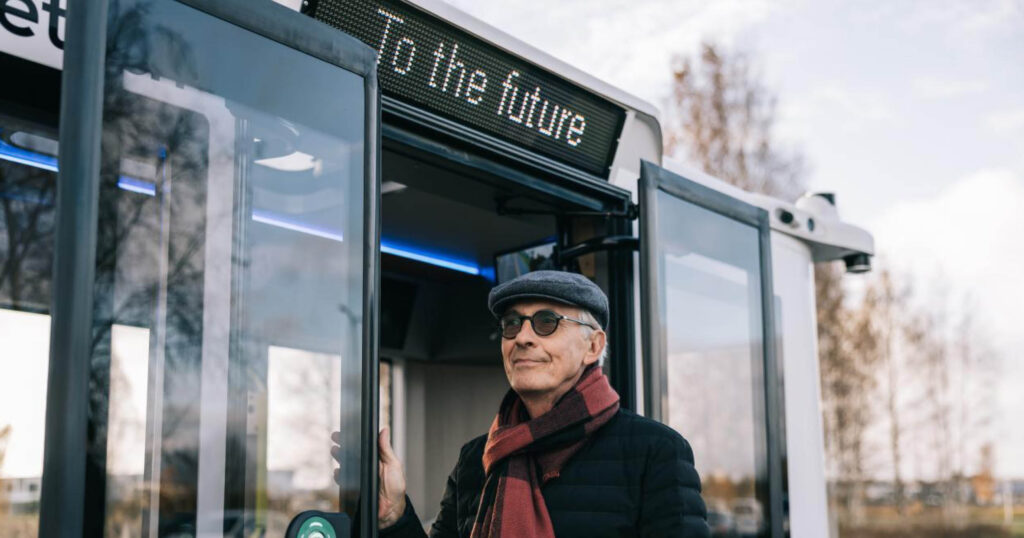
One of the costliest mistakes a startup can make is spending months or years developing a product that customers don’t actually need. That is why, at an early stage, a large home market may matter less to a company than the opportunity to test its solution quickly and in a controlled way.
Estonia’s small size can be an advantage here. Reaching potential users, partners and first pilot customers can be easier, and feedback helps to assess more quickly whether a solution meets a real need.
Digital public infrastructure creates opportunities for developing new services, and cooperation between companies, research institutions and the public sector helps find practical applications for technological ideas. Estonia can be a place to validate initial business assumptions before moving on to larger markets.
This is particularly important for deep tech companies. A working prototype does not yet mean a working business. The next questions concern the reliability of the technology, the scalability of production, regulatory requirements, pricing and customers’ willingness to pay for the solution.
When these questions are answered early, a company can make better-informed decisions about investment and international expansion.
“Estonia combines an internationally minded founder community with close connections between startups, researchers, investors and the public sector. Its compact scale can make it easier to find the right partner and test an idea with real users. The ecosystem has grown beyond software into deep tech, defence, health and industrial innovation. For Finnish entrepreneurs, the short distance across the Gulf of Finland makes cross-border collaboration especially practical,” notes Kevin Chavanne, Head of Startup Ecosystem Development at Startup Estonia.
When innovation collides with regulation
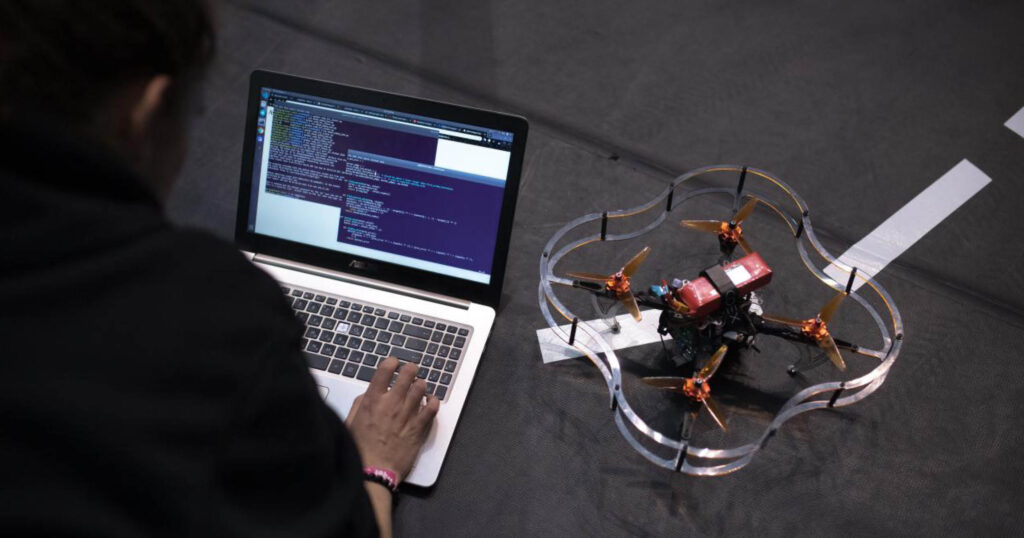
In technology development, the biggest obstacle is not always money or technical capability. Sometimes innovation simply moves faster than the regulation surrounding it. This is where the Accelerate Estonia programme, by the Ministry of Economic Affairs and Communications, can help. Their main idea – rather than companies having to change their innovative technologies and solutions to fit with the current regulations, let’s change the regulations!
At the moment there are several projects in the works: changing the pharmacy regulation to allow automated self-service pharmacies, changing the electronic communications regulation to allow electronic warfare testing for drones, opening up the market to build solar parks on apartment buildings etc.
In addition, Accelerate Estonia is developing the so-called Experimentation framework – a regulatory sandbox model that makes it possible to test new technologies and business models in real-life situations where current regulation may not keep pace with technological development.
A regulatory sandbox does not mean operating without limits. It requires a defined testing area, a time frame, supervision and agreed conditions. The company can gather real-world evidence, and the state can assess which regulations need to be changed.
Accelerate Estonia has highlighted mobility, unmanned aviation, healthtech, cleantech, deeptech as possible areas, among many others. According to the original plan, the aim is to integrate the experimentation framework into Estonian law in 2026 and launch the first sector-specific regulatory sandboxes.
For a Finnish entrepreneur, this is an important opportunity worth following, especially if the company’s development is held back by the regulatory environment rather than by technology. Estonia may offer a place to explore the conditions under which a novel solution can be tested in real life.
In general, Estonia consistently ranks among the world’s leading countries in the International Tax Competitiveness Index, thanks to its relatively simple and competitive tax system. Also, Estonia’s regulation of stock options is relatively business-friendly, allowing employees to benefit from equity-based compensation under favourable tax conditions when the applicable legal requirements are met.
In addition, Estonia performs well in the OECD’s PISA assessments, with its students achieving some of the strongest results in Europe, particularly in mathematics, reading, and science.
Where to start in Estonia?
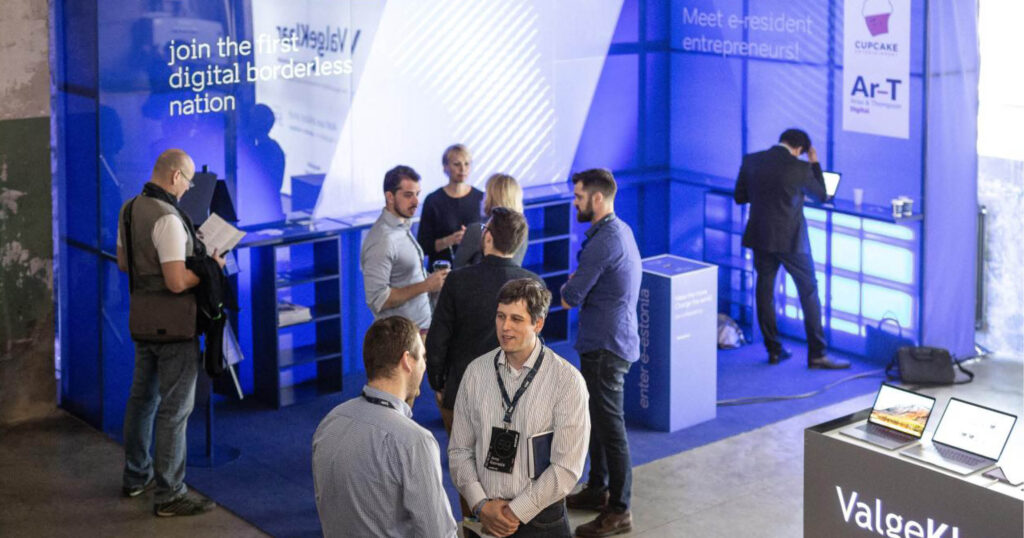
There is no single universal path into the Estonian ecosystem. The right contact depends on whether a company needs its first prototype, investment, an accelerator programme, a research partner or help shaping an international business model.
e-Residency enables international entrepreneurs to establish and run an Estonian company online. It can be a practical starting point for managing a company and organising cross-border business, but it does not replace local operating licences where these are required, nor does it automatically grant the right to live or work in Estonia.
Startup Estonia helps you get an overview of the Estonian startup ecosystem, support organisations, programmes and opportunities for market entry. It is a good first point of contact for entrepreneurs who want to understand which partners and initiatives are active in their field. Regional cooperation is also being developed. Together with other Nordic ecosystems, Startup Estonia is part of the Nordic Deep Tech Valley initiative, which aims to bring together the resources of Estonia, Finland, Sweden and other countries in the region into a stronger international innovation space.
Tallinn Business Incubator supports companies that, alongside technology, need help with their business model, positioning, design, marketing, exports or international negotiations. It can also be a good starting point for a Finnish entrepreneur who wants to get to know the Estonian market better and find local partners.
Accelerate Estonia helps entrepreneurs turn bold ideas into scalable solutions by navigating regulations, testing innovations, and accessing global markets faster.
Test in Tallinn offers a real-world testbed for innovative solutions in mobility, energy efficiency, renewable energy, resilience, security, civil protection and crisis preparedness. Test, validate and develop your solutions in Tallinn – and take them to global markets.
Prototron helps early teams fund and build their first working prototype.
EstBAN, the Estonian Business Angels Network, offers opportunities to meet investors, find funding and get advice from experienced entrepreneurs.
Startup Wise Guys is best suited to early-stage B2B companies looking for an accelerator programme, an international network and contacts with investors.
Tehnopol Accelerator Tallinn focuses on the growth of technology companies. Its programmes have included initiatives for various fields, including artificial intelligence, deep tech, health technology, and defence and dual-use technologies. In 2026, 97 teams applied to its main accelerator, of which nine were selected.
Sparkup Tartu Science Park offers an access Estonia’s innovation ecosystem, collaborate with cutting-edge startups and researchers, and explore new business opportunities across the Baltics.
IGNITER at TalTech offers an exciting opportunity to connect with Estonia’s next generation of entrepreneurs, support early-stage startup development, and build relationships with emerging talent, innovative business ideas, and future founders.

AUTHOR
Monika Pärnsalu works at Tallinn Business Incubator as a consultant and as project manager of the Creative Industries Development Centre. She has extensive experience in foreign trade in Tallinn and London, a law degree from the University of Tartu, an MBA in International Business Administration with a specialisation in marketing, and a master’s degree from the Faculty of Design of the Estonian Academy of Arts. Her work focuses on developing startups, shaping brands and positioning, internationalisation, and helping Estonian companies reach foreign markets.